How to Draw a Painting Stand
Collage painting is a busy medium. Information technology is important to focus on how to make certain your subject stands out from what is around it and in the background. Elizabeth St. Hilaire, artist and writer of Painted Paper Fine art Workshop, guides us through how to do only that with stunning, gorgeous examples from her own collage painting portfolio.
Low-cal or Dark
To simplify your collage painting, choose whether your subject volition exist darker or lighter than the background, and work accordingly. Contrasting colors can also help separate the bailiwick from the background. Contrasting or complementary colors are opposites on the color wheel. (You can find color wheels online in the form of charts, or you can purchase 1 from your local fine art supply store or view 1 online. It is very helpful to be able to determine opposite colors when you lot are painting.)
Detailed or Simplified
Some other technique I rely on for separating the subject from what's behind information technology is the level of detail I use. Generally my subjects are pretty detailed and my backgrounds are more simplified. The details assist to make the subjects more prominent, particularly when placed against a simple background.

Contrasting Colors
Using contrasting colors for your subject and groundwork not just creates contrast but helps your subject stand out from the background. The yellowish bottom of Blue Crab Triptych is lighter and warmer and as well contrasts with the darker, cool-colored crabs.
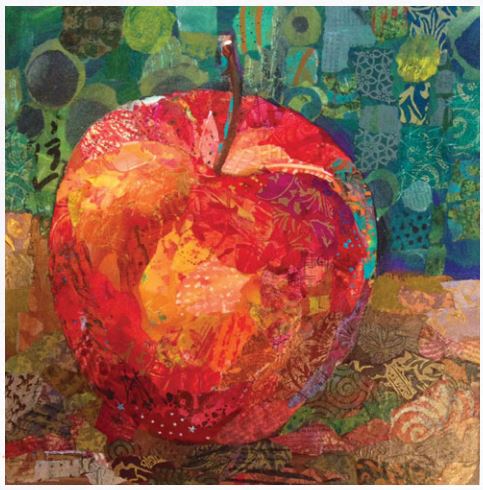
In Emily'southward Apple, the red and green colors are not just opposites on the color cycle, they are as well opposite temperatures.
More Color Contrast
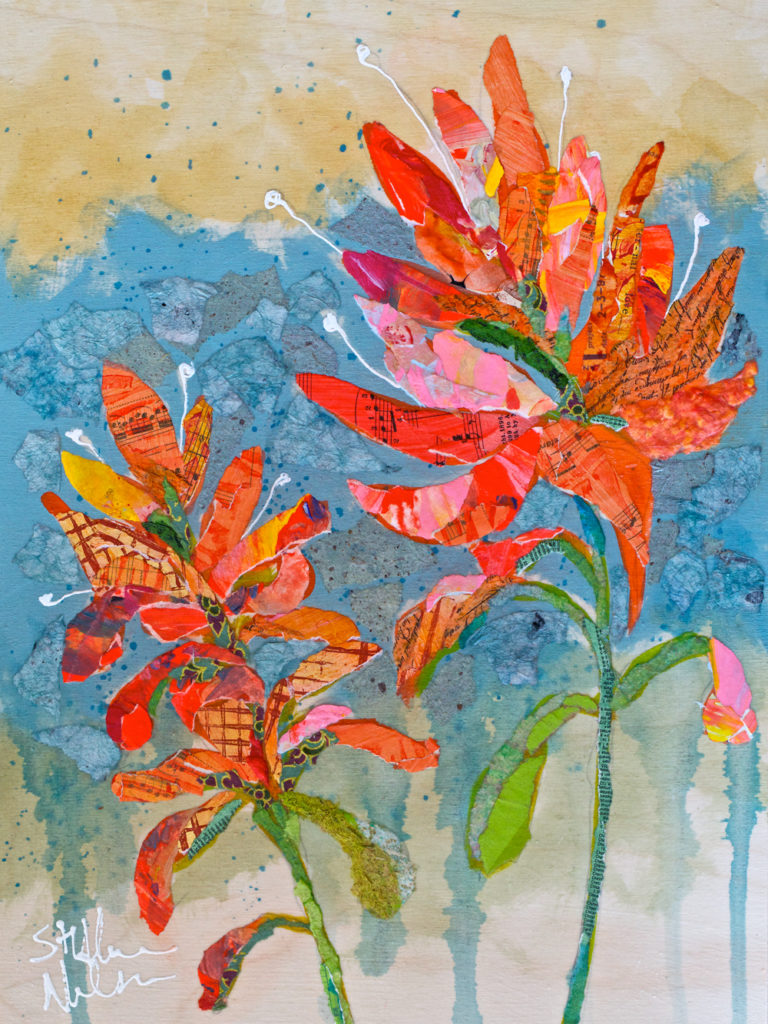
Orange and blue are opposite colors on the colour wheel, and this dissimilarity helps the flowers to stand up out from the groundwork in Indian Paintbrush #2. Color looks most vibrant when juxtaposed with its contrary color. This is also an instance of a detailed field of study (the flowers) against a simple groundwork (the blue paper and blue wash of acrylic).
In Nautilus, we take a subtle example of opposite colors. The sandy background is in a slight xanthous hue, and yellow is reverse of purple. Additionally, the shell is much darker in dissimilarity to the lighter background, which as well helps to split up the two.

Using White
Maps, old book pages, paper doilies, sheet music, menus, handwriting, your grocery list … all are wonderful papers to utilize for white areas in your composition. Squint and await closely. Which whites are dark and which are low-cal? Y'all tin create all the shading you need in white areas from text and type without ever painting any white paper at all.

The meringue on the pie is a good instance of utilizing a variety of text and blazon in sizes and densities for white. As well notation the oxidized (yellowed from historic period and exposure to air) papers from old books I used to create shading and constitute values of white without paint.
More Collage Painting
Add color, depth, and texture to your collages by mitt-painting paper in a multifariousness of different ways.
Source: https://www.artistsnetwork.com/art-mediums/mixed-media/how-to-separate-the-subject-from-the-background-in-collage-painting/
0 Response to "How to Draw a Painting Stand"
Post a Comment